
ProMIS licenses brain delivery technology to advance Alzheimer’s pipeline
ProMIS Neurosciences has licensed a brain-selective delivery technology from Ossianix, with the potential to improve antibody delivery for Alzheimer’s disease and other neurodegenerative disorders.
The agreement gives ProMIS rights to use TXP1 with PMN310, its investigational Alzheimer’s antibody, and options to extend the technology to programmes targeting Parkinson’s disease and amyotrophic lateral sclerosis (ALS).
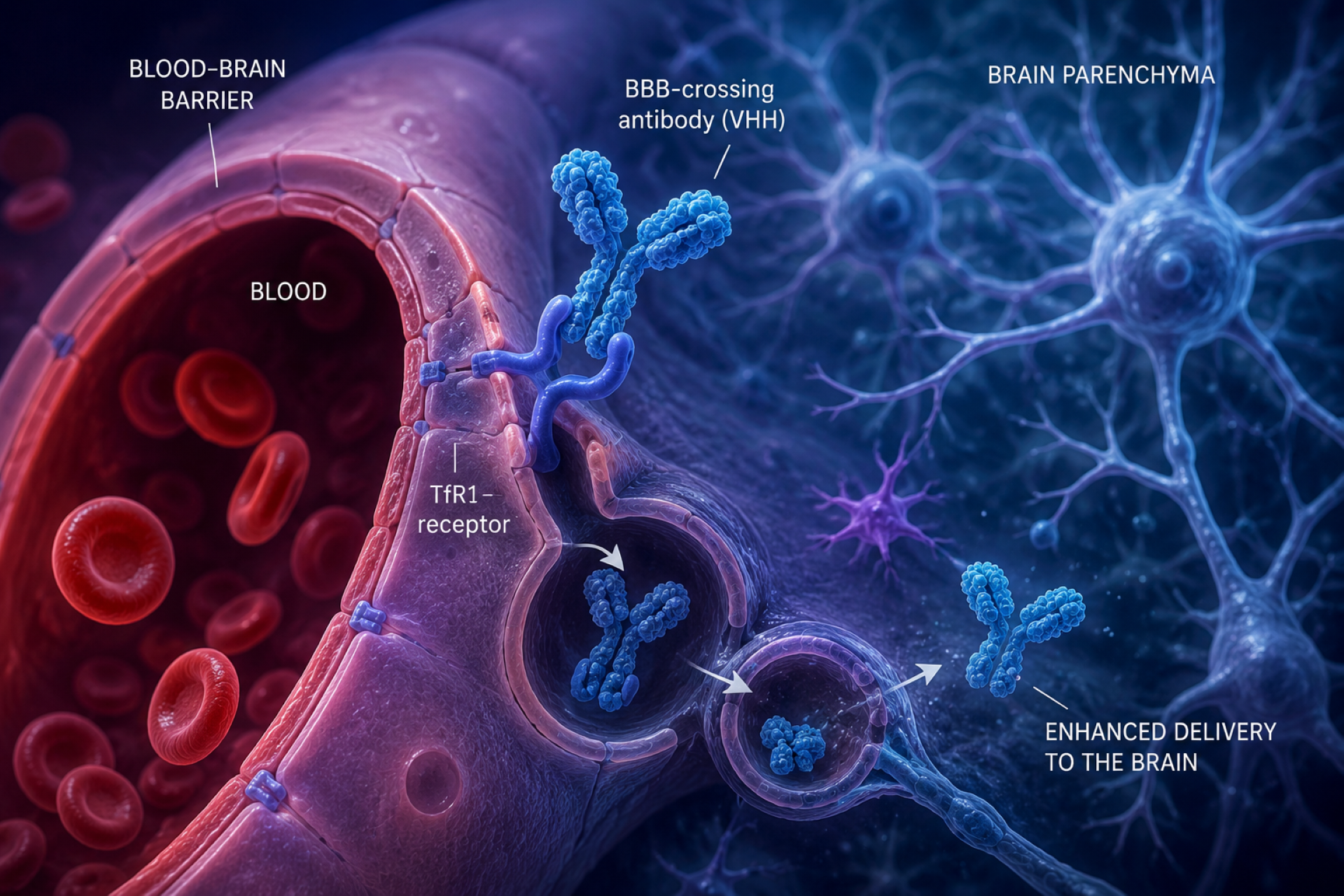
Preclinical studies conducted by Ossianix demonstrated that TXP1 increased delivery of a therapeutic antibody to the brain by more than 65-fold compared with delivery without the shuttle technology.
Technology aims to improve brain antibody delivery
TXP1 targets transferrin receptor 1 (TfR1), a protein involved in transporting substances across the blood-brain barrier.
The technology uses a deimmunised single-domain VNAR antibody scaffold, which is smaller than a conventional antibody and designed to facilitate transport into the brain.
Ossianix reported that its preclinical studies, including research in non-human primates, demonstrated increased brain delivery alongside prolonged exposure. The company also reported no accumulation in several peripheral organs, including the liver, spleen, lungs and kidneys.
Other findings included binding that does not compete with transferrin and minimal impact on reticulocyte levels, an effect associated with some other TfR1-targeting approaches.
ProMIS chief executive officer Neil Warma said: “We believe TXP1 is among the most compelling TfR1 shuttles in development.”
He added that combining the technology with antibodies targeting toxic misfolded proteins could support a second-generation PMN310 with a more convenient subcutaneous dosing schedule.
Agreement extends potential use across pipeline
The initial licence covers PMN310, ProMIS’s lead antibody candidate for Alzheimer’s disease. The company also holds options to apply TXP1 to PMN442, which targets alpha-synuclein, and PMN267, which targets TDP-43.
Alpha-synuclein is implicated in Parkinson’s disease and dementia with Lewy bodies, while TDP-43 is associated with ALS and frontotemporal dementia.
The agreement therefore provides ProMIS with an opportunity to extend the delivery technology across several neurodegenerative disease programmes.
Ossianix will receive an upfront payment and is eligible for development, regulatory and commercial milestone payments, alongside royalties on global net sales.
ProMIS intends to fund its short-term obligations under the agreement from existing cash resources and does not expect the deal to change its previously disclosed cash runway through 2027.
PMN310 clinical development continues
PMN310 is a humanised monoclonal antibody designed to selectively target toxic amyloid-beta oligomers while avoiding amyloid plaques.
The candidate is being evaluated in PRECISE-AD, a randomised, placebo-controlled Phase 1b study involving patients with mild cognitive impairment due to Alzheimer’s disease or mild Alzheimer’s disease.
The TXP1 agreement does not affect the ongoing development of PMN310. ProMIS has said it remains committed to advancing the existing candidate as both an intravenous and subcutaneous product, subject to clinical data.
The potential benefits of combining PMN310 with TXP1, including improved brain delivery and more convenient dosing, will require further investigation.