
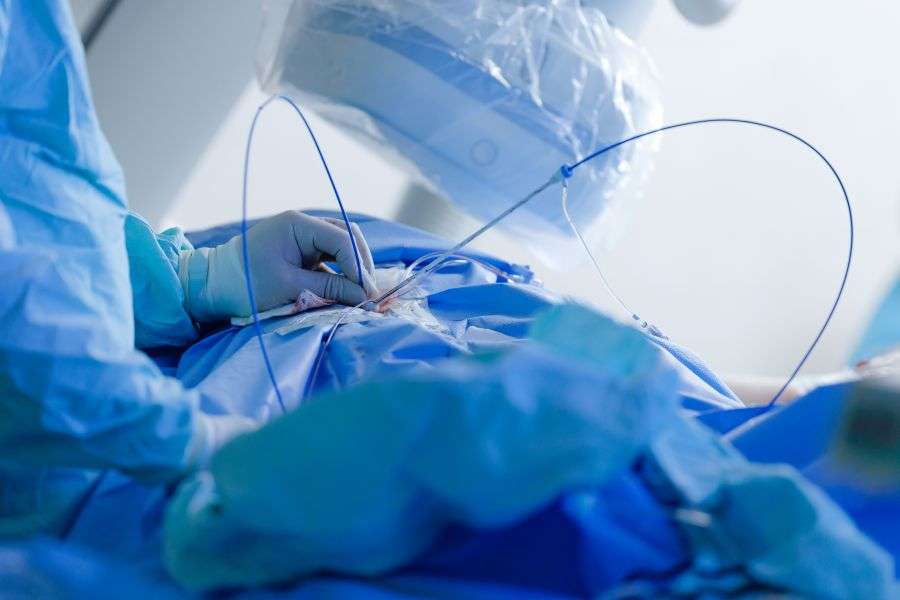
E2 secures FDA clearance for pulmonary embolism thrombectomy system
The FDA has cleared two devices from E2 for pulmonary embolism treatment, combining mechanical clot removal with an integrated blood-return system.
Dual clearance for pulmonary embolism treatment
Endovascular Engineering (E2) has secured US Food and Drug Administration (FDA) 510(k) clearance for its Hēlo Thrombectomy System and Hēlo Return Blood Return System, designed for use together during mechanical thrombectomy procedures.
Pulmonary embolism (PE) occurs when a blood clot blocks an artery in the lungs. Mechanical thrombectomy is a minimally invasive approach that uses catheter-based technology to remove clots from blood vessels.
The Hēlo Thrombectomy System is designed to remove clots from the pulmonary arteries and venous vasculature. It uses continuous vacuum aspiration alongside mechanical clot disruption to draw clots into a catheter for removal.
According to E2, the system combines a 15F crossing profile with steerable navigation and a 24F clot ingestion funnel at the catheter tip. The company says this design is intended to support navigation through the pulmonary vasculature while enabling the removal of large clots.
The FDA clearance follows a review of clinical data from the ENGULF investigational device exemption (IDE) study, which evaluated the Hēlo Thrombectomy System.
Blood return integrated into thrombectomy procedures
The second clearance covers Hēlo Return, which collects and filters blood aspirated during thrombectomy before returning it to the patient.
Blood loss is a consideration during large-bore aspiration procedures, making blood management an important aspect of catheter-based clot removal.
E2 says the integrated system achieved near-zero blood loss in patients treated with blood return during the ENGULF study. The company also describes Hēlo Return as the first blood-return system cleared for use with continuous vacuum aspiration.
These performance claims require context. E2 cites comparisons with published pulmonary embolism pivotal studies, but notes that the comparisons are descriptive and are limited by differences in study design, patient populations and endpoints. They are not based on head-to-head trials.
The company reported that testing to assess blood quality under continuous vacuum conditions was conducted in accordance with FDA guidance. Data from the testing was presented at the Society of Interventional Radiology annual scientific meeting in April 2026.
Expanding access to mechanical thrombectomy
Eric Secemsky, director of vascular intervention at Beth Israel Deaconess Medical Center, said: “The platform addresses real practical challenges we face in these procedures, and I believe it has the potential to meaningfully expand access to mechanical thrombectomy for a broad range of patients.”
The dual clearance allows E2 to move forward with plans to bring both devices to physicians treating venous thromboembolism (VTE), a condition that includes deep vein thrombosis and pulmonary embolism.
E2 chief executive Dan Rose said the platform was developed to address procedural limitations, including the need for clot removal through a lower-profile catheter and integrated blood return.
The company has not provided comparative evidence establishing that the system delivers better clinical outcomes than other available thrombectomy technologies. Its potential contribution will therefore need to be assessed through clinical experience and further evidence.
The clearances mark a regulatory milestone for E2, although FDA 510(k) clearance should not be interpreted as proof of superiority over competing devices. The system’s clinical value will depend on how effectively it supports clot removal, blood management and procedural safety in practice.