
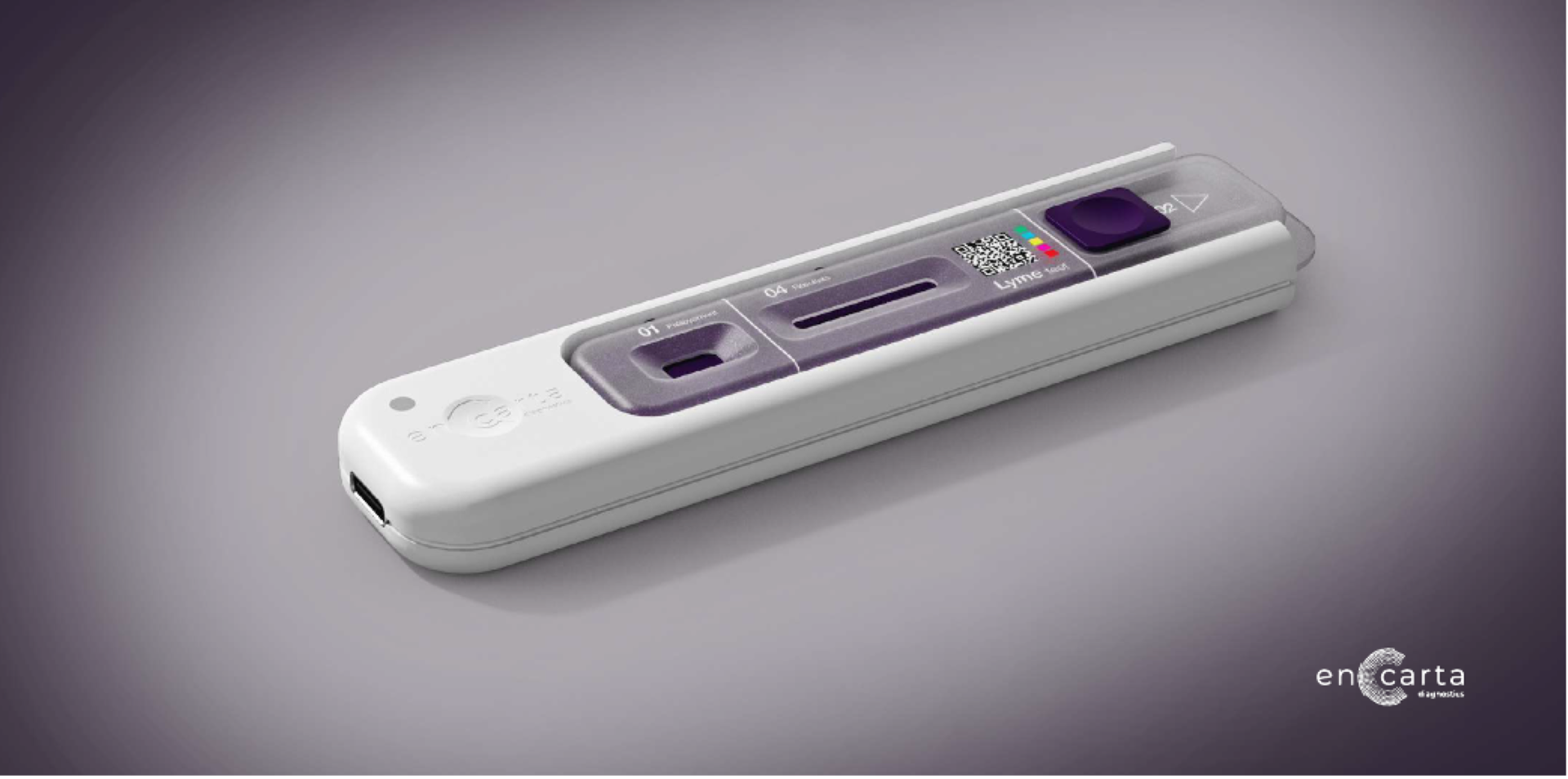
En Carta Diagnostics receives FDA breakthrough device designation for Lyme disease test
En Carta Diagnostics has received FDA Breakthrough Device Designation for its EC Pocket Lyme molecular diagnostic test, a point-of-need platform designed to detect Borrelia bacteria in the early stages of Lyme disease.
The designation is intended to accelerate the development and review of technologies that could offer more effective diagnosis or treatment for serious conditions, and provides companies with priority review and closer interaction with FDA experts.
EC Pocket Lyme is designed to detect Borrelia DNA directly from interstitial fluid sampled at the site of a tick bite using a microneedle-based sampler. The company said the single-use cassette format is intended to be affordable and suitable for large-scale distribution, with results used alongside clinical assessment and laboratory testing.
Margot Karlikow, co-founder and cto of En Carta Diagnostics, said: “This Breakthrough Device Designation is a pivotal moment for us. It significantly strengthens our regulatory path by enabling closer collaboration with the FDA and accelerating our route to market, so patients can benefit from our technology sooner.”
Early diagnosis of Lyme disease remains challenging, with standard clinical practice relying on visual identification of erythema migrans rash and antibody-based tests. Antibodies typically become detectable several weeks after infection, limiting the utility of immunoassays for early-stage diagnosis. Undetected infections can progress to more severe disease and, in rare cases, may be fatal.
The company said its approach addresses these limitations by enabling direct sampling of interstitial fluid at the bite site and molecular detection of bacterial DNA before the immune response develops. Individuals with suspected tick exposure or erythema migrans could use the test to assess infection risk at an earlier stage.
Lyme disease incidence has been increasing across the Northern Hemisphere for several decades. In the US, an estimated 476,000 new cases occur annually, highlighting the ongoing need for improved diagnostic tools.
The EC Pocket Lyme platform is based on aptamer technology, which the company said enables high-affinity binding to predefined molecular targets. En Carta Diagnostics said the same platform could be adapted for additional genetic, pathogenic and veterinary applications, forming the basis of a broader diagnostics pipeline.
Guillaume Horreard, co-founder and ceo of En Carta Diagnostics, said the designation supports the company’s development programme and engagement with regulators and partners. “If approved, our diagnostics platform will be the first one to aid in the early detection of the bacteria responsible for Lyme disease. I am convinced our work will become a go-to solution for the 50 million people who see signs of a tick bite each year,” he added.
The company did not disclose timelines for regulatory submission or commercialisation but said the designation would support a more efficient development pathway in the US.