
ISS National Lab research advances DNA-inspired cancer nanomaterials for chemotherapy and immunotherapy development
Eascra Biotech is advancing DNA-inspired nanomaterials developed with ISS National Laboratory research into next-generation cancer therapies targeting hard-to-treat solid tumours.
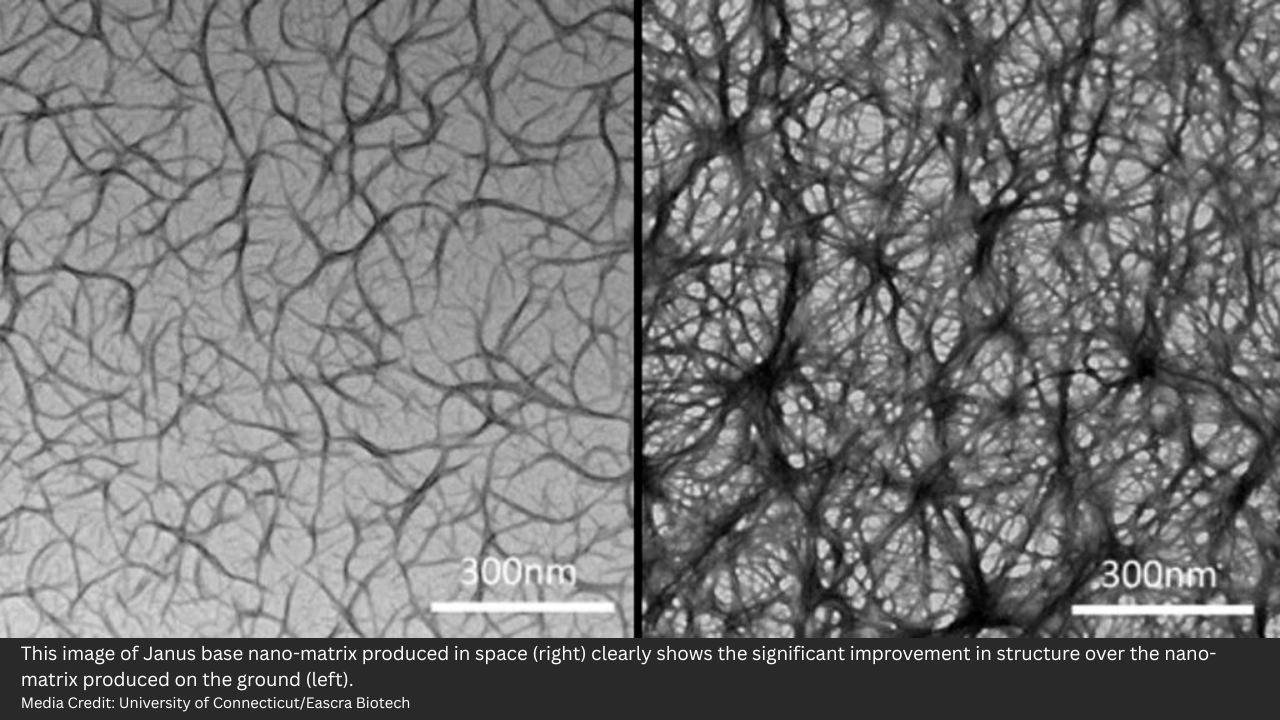
The work centres on Janus base nanomaterials (JBNs), synthetic DNA-inspired structures that self-assemble into nanotubes designed to carry therapeutic payloads directly into cancer cells. The programme builds on prior ISS National Laboratory-supported studies showing that JBNs produced in microgravity form more uniform and durable structures compared with those manufactured on Earth, with potential implications for improved drug performance.
The company is now developing two commercial candidates: a JBN-based chemotherapy and a JBN-based immunotherapy. Both are intended to improve precision targeting in solid tumours, including triple-negative breast cancer, high-grade ovarian cancer, and select bone cancers.
A key feature of the platform is its biomimicry. Because JBNs are designed to resemble natural DNA structures, they can evade immune detection, allowing therapeutic cargo to remain concentrated at tumour sites for longer periods. This sustained exposure is intended to improve treatment efficacy while reducing systemic toxicity and side effects associated with conventional chemotherapy.
The materials also offer practical manufacturing advantages. JBN-based therapeutics are reported to be stable at room temperature, removing the need for cold-chain storage and potentially simplifying global distribution and access.
“Microgravity research has given us a clearer path toward optimizing this technology for real-world cancer treatment,” said Mari Anne Snow, CEO and co-founder of Eascra Biotech. “These findings bring us closer to delivering more precise and effective therapies for patients with aggressive and drug-resistant tumors.”
The latest work is scheduled to launch no sooner than April 9, 2026, aboard NASA’s Northrop Grumman Commercial Resupply Services 24 mission from Cape Canaveral Space Force Station. The mission will deliver more than 10 ISS National Lab-sponsored investigations, spanning areas from cancer research to heart disease modelling and environmental monitoring.
For Eascra, the ISS programme forms part of a broader effort to translate microgravity-enabled discoveries into commercial therapies. The company is positioning JBNs as a platform technology that could be adapted across multiple disease areas, with oncology currently the lead focus.
The use of space-based research environments reflects a growing interest in leveraging microgravity to solve complex biological and materials science challenges that are difficult to replicate on Earth. In this case, improved structural uniformity of nanomaterials produced in orbit is seen as a potential route to more consistent drug delivery systems.
If successful, the approach could expand the toolkit available for targeted cancer therapy design, particularly in tumours that remain resistant to existing treatment modalities.