
Lithuania’s vice minister Daniel Naumovas on health innovation: “We want patients to feel they can get the best treatment here”
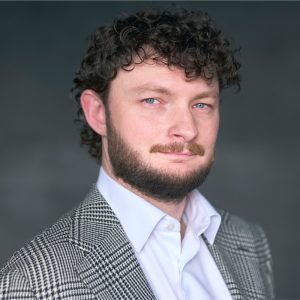
Daniel Naumovas is a scientist, a teacher and, at 31, Lithuania’s vice minister of health with responsibility for innovation.
During Life Sciences Baltic, 2025, Discover Pharma had the pleasure of speaking with him – his energy is infectious.
When Naumovas talks about health policy, his words come fast, often with a laugh, but always with clarity. “For the first time, we have a vice minister in health responsible for innovation. That’s me. It’s proof that we are moving in the right direction,” he said.
His appointment signals a shift in the ministry’s priorities: moving healthcare beyond bureaucracy and into a future defined by personalised medicine, clinical trial reform, biobanking, and the responsible use of AI. The challenge, he admits, is persuading both patients and industry that a small Baltic state can lead.
A mission to speed up access
Lithuania’s healthcare system is small, but Naumovas believes its size can be turned into an advantage. “One of the priorities is to make innovative medicines and drugs come faster to reimbursement — and not only to reimbursement, but also through clinical trials,” he said.
Pharma companies have historically overlooked the country, with patients often waiting years for access to modern therapies. To counter this, Naumovas is pushing to shorten the health technology assessment (HTA) process and raise what he calls the government’s “willingness to pay” for new drugs.
This shift is already visible. “For the first time this year, we have reimbursed 11 personalised medicines for solid cancers. Before, we had strong therapies for liquid tumours, but now we’ve completely changed the algorithms for solid cancers too,” he said. For patients, that means faster access to targeted therapies, and for clinicians, greater flexibility to prescribe treatments tailored to a tumour’s genetic profile.
Lithuania’s own CAR T cell therapies
If there is one project Naumovas speaks about with particular pride, it is Lithuania’s decision to develop its own CAR T cell therapy. “Only two countries in Europe — Spain and Lithuania — have done that. And it’s not just pride, it means patients can get treatment faster, at around a third of the cost,” he said.
The difference is stark. Commercial CAR T products often involve sending a patient’s immune cells to be processed abroad, a journey that can take a month. Lithuania’s locally produced version takes 8–12 days, a timescale that can mean the difference between life and death for some patients.
“There cannot be anything more personalised than that,” Naumovas said. He is quick to add that this development is not just about national pride but about sustainability. With budgets under strain, lowering the cost of advanced therapies while maintaining quality will be key to ensuring access.
Biobanks as living resources
 Naumovas helped establish Lithuania’s first hospital-based biobank and has carried that passion into government. He rejects the idea that biobanks are archives to be locked away. “The role of a biobank is not to store samples and data. It’s to share it. Storing is only the intermediate step,” he said.
Lithuania is now part of BBMRI-ERIC, Europe’s network of biobanks, which means its data and samples can contribute to cross-border studies on rare and ultra-rare diseases. For patients with conditions too rare to be studied within one country, this is vital.
“The private sector is not a bad guy,” Naumovas added. “Sometimes it is even better, because their developments will reach patients faster.” By connecting industry with academic researchers, he hopes to create an ecosystem where patients benefit directly from shared resources.
Digital health and AI
Lithuania has long been known for its digital ambitions, and healthcare is no exception. The country has invested in e-health infrastructure for two decades, creating a system that already ranks among the EU’s top five. “We already have an amazing app — you can register to your family doctor in 30 seconds,” Naumovas said with a smile.
But the next stage is more complex: enabling secure secondary use of health data and preparing for EU-level AI regulation. “We cannot have four different institutions accrediting AI tools. We need a one-window approach,” he said.
Hospitals are being asked to standardise decades of patient records, much of it written as free text. Those that comply will be eligible for extra funding. “It’s about creating a structure where innovation is not blocked by paperwork but is safe and trustworthy,” he explained.
A scientist in government
Naumovas insists that he remains a scientist first. He continues to teach medical students weekly, publish papers and pursue his PhD. “When a vice minister is teaching you, participation is much higher,” he joked. For him, the classroom is not a distraction but a reminder of why healthcare matters.
He describes himself as politically independent. “I’m not a member of any party. I don’t want to go deeply into politics. But if it means more money for healthcare, then yes, I will sacrifice myself for that,” he said.
That independence has helped him win over sceptics. “Our social partners say this is the first time the ministry is ready to speak. I always tell them: let’s talk on facts, not emotions. If you give me the arguments, that becomes my priority.”
Preparing for security threats
Naumovas is also blunt about Lithuania’s geopolitical reality. “We have two bad neighbours,” he said. For him, healthcare security is part of national security. “During wars, most people don’t die from rockets, they die because they cannot get treatment. We are creating infrastructure to be independent, so that even in crisis we have antibiotics, pain relief, the basics.”
Next, he plans to visit Ukraine to learn directly how their healthcare system functions under bombardment. “They are dealing with this reality every day. We must learn from them,” he said.
A rapid rise
Naumovas’s personal journey is almost as striking as his policies. “When I was 25, I opened a new hospital department. At 26 I was head of it. Then the minister called me on December 31 to join her team,” he recalled.
His youth, once seen as a limitation, is now part of his appeal. He wants young scientists and doctors to see government not as a distant bureaucracy but as a place where they can make real change. “Nothing is impossible. You can make changes as a lab manager, as a scientist, or even as a politician. Just always remember: what you do must help people.”
He shrugs off the idea of being a role model, but the blend of scientific rigour, openness and impatience to act makes him a distinctive figure in European health politics.
Investing in trust
At the heart of his vision is trust — patients trusting that their government will pay for the best available treatments, clinicians trusting that the system will allow them to innovate, and researchers trusting that their work will find real-world application.
“If I know that my government is paying for the best treatment, and my family or I can get it if needed — that is already good for my psychological health. That’s a good investment,” Naumovas said.
For Lithuania, the stakes are high. But in Naumovas, the country has a vice minister determined to put innovation not at the margins but at the centre of healthcare.