Cancer vaccine research secures $2.5M NIH award for nanoparticle treatment
A $2.5m National Institutes of Health award will support research into a nanoparticle-based cancer vaccine designed to treat existing tumours.
Targeting the tumour and lymph nodes
The five-year research programme, led by Prabhani Atukorale, assistant professor of biomedical engineering at the University of Massachusetts Amherst, will investigate a vaccine approach that delivers two immune-activating compounds to different locations in the body.
The research builds on previous work in which Atukorale’s team used nanoparticles to stimulate an immune response through the lymph nodes. The new programme will adapt the approach for people with existing cancer, with the aim of directing activated T cells towards tumours that are difficult for the immune system to recognise.
Atukorale said: “Last year’s paper was all prophylactic, and our results were really exciting, but that kind of lymph node-only approach would not work for a patient who already has an advanced tumor.”
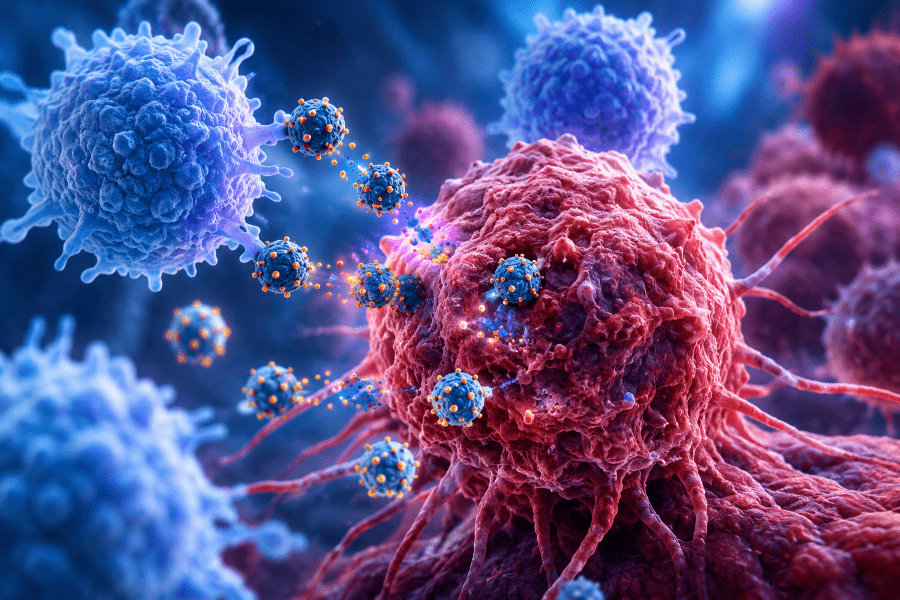
The new approach is known as a prime-pull strategy. The vaccine first primes the immune response in the lymph nodes before a second component is delivered to the tumour.
Atukorale said: “We prime the immune response at lymph nodes, and then we pull it to tumors.”
The researchers are particularly interested in so-called immunologically cold tumours, which can suppress immune activity in their surrounding microenvironment and prevent tumour-specific T cells from reaching them.
Using nanoparticles to activate the immune response
The treatment uses nanoparticles to deliver two adjuvants, compounds that stimulate the immune system. The researchers aim to deliver both signals to the same immune cells rather than administering the compounds separately.
Atukorale said: “In doing so, the particles remodel the tumor microenvironment and now the tumor is no longer hidden for those primed T cells to find their way back in.”
The dual-delivery approach is intended to address two stages of the cancer immune response: generating tumour-specific T cells in the lymph nodes and then helping those cells reach and act against the tumour.
Atukorale said: “Nanoparticles have advantages that free adjuvants do not.”
The researchers say the nanoparticle system can carry two adjuvants that would otherwise be difficult to combine because they have different physical properties.
Research will begin in metastatic melanoma
The research will initially focus on metastatic melanoma, although the team hopes the approach could eventually be adapted for other difficult-to-treat cancers, including pancreatic cancer and triple-negative breast cancer.
The programme remains at the preclinical research stage. Previous studies from Atukorale’s group have tested the nanoparticle vaccine approach in mouse models of cancer, while the new NIH-funded work will investigate how the prime-pull strategy works against established tumours.
The award will support research over five years as the team works to understand the immune mechanisms behind the approach and develop the technology towards potential future human studies.
The research could ultimately provide a platform for cancer vaccines designed to stimulate an immune response while also altering the tumour environment to make cancer cells more accessible to immune cells.