
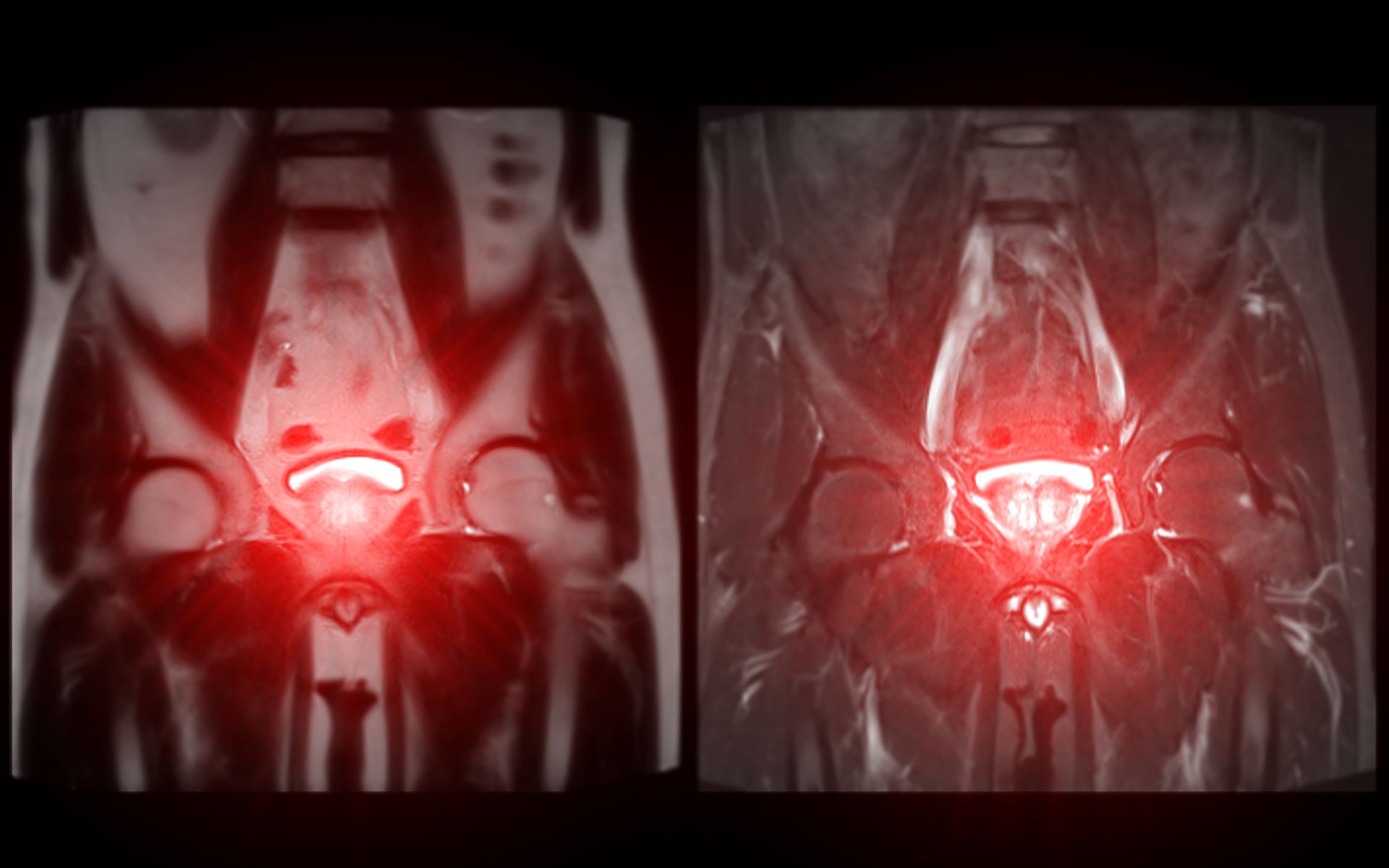
MRI study suggests some prostate cancer biopsies could eventually be avoided
A study of 880 men found clinically significant prostate cancer in all 69 patients biopsied after radiologists were 99 per cent certain from MRI scans.
MRI identifies high-risk prostate cancer
Researchers from UCL and UCLH have found that highly experienced radiologists could identify clinically significant prostate cancer with a high degree of confidence in a selected group of men undergoing investigation for suspected disease.
The retrospective study examined 880 men attending a one-stop prostate cancer clinic. MRI scans from 251 patients showed a high suspicion of cancer, with a score of four or five out of five.
Four experienced radiologists reviewed the scans, with access to each patient’s age and PSA level but without knowledge of biopsy results. They classified the scans according to their confidence that clinically significant prostate cancer was present.
Seventy-nine scans were placed in the highest-confidence group, where the radiologists were 99 per cent certain that significant cancer was present. Sixty-nine of the men in this group underwent biopsy and all 69 were diagnosed with clinically significant prostate cancer.
Around 72 per cent had grade group 3 disease or higher.
The findings suggest that there may be a highly selected group of patients in whom MRI could eventually provide enough diagnostic certainty to reduce the need for an invasive biopsy. However, the study does not establish that MRI can replace biopsy in routine prostate cancer diagnosis.
Biopsy remains important for diagnosis
Prostate biopsy involves removing tissue samples from the prostate for examination under a microscope. As well as confirming whether cancer is present, biopsy provides information about the grade and characteristics of the tumour that can influence treatment decisions.
Jiri Kubes, radiation oncologist and medical director of the Proton Therapy Center in Prague, said: “A 100 per cent confirmation rate in this carefully selected group is striking. It suggests that certain prostate tumours may have an appearance so distinctive that highly experienced radiologists can recognise them with near certainty.”
He added that the findings should not be interpreted as evidence that men can routinely avoid biopsy.
“However, these were selected patients examined at a specialist centre. It would be dangerous to translate the headline into ‘MRI can now replace biopsy’ for every man being investigated,” Kubes said.
MRI can show the location, size and characteristics of a suspicious area, while biopsy provides cellular information about the tumour. That distinction remains important because tumours that look similar on imaging can have different biological behaviour.
Kubes said: “Two abnormalities may appear similar on a scan but behave very differently. Knowing the grade of the cancer remains enormously important when deciding whether someone needs immediate treatment and which approach offers the best balance between controlling the disease and limiting side effects.”
Larger studies needed before practice changes
The study was conducted at a single specialist centre and relied on assessments by four experienced radiologists. The researchers now need to establish whether the results can be reproduced across different hospitals and among radiologists with varying levels of experience.
Prospective, multicentre research will be needed before biopsy could be removed from the diagnostic pathway for selected patients.
Further work could also investigate whether objective MRI features, radiomics or machine learning can help identify patients whose scans provide sufficiently strong evidence of clinically significant disease.
Kubes said: “Before treatment without biopsy could become routine, we would need prospective, multi-centre trials, consistently high-quality MRI scans and strict rules defining which patients are suitable.”
The findings were published in the European Journal of Radiology.
For now, prostate biopsy remains an important part of confirming prostate cancer and determining its characteristics. The new findings instead point towards a potential future in which MRI could help identify a carefully defined group of patients for whom biopsy provides limited additional diagnostic information.
Kubes said: “This study offers a fascinating glimpse of a faster and less invasive diagnostic future. But for men being assessed today, biopsy remains the standard method of confirming prostate cancer.”
The researchers’ findings therefore represent a potential refinement of prostate cancer diagnosis rather than an immediate replacement for biopsy.