
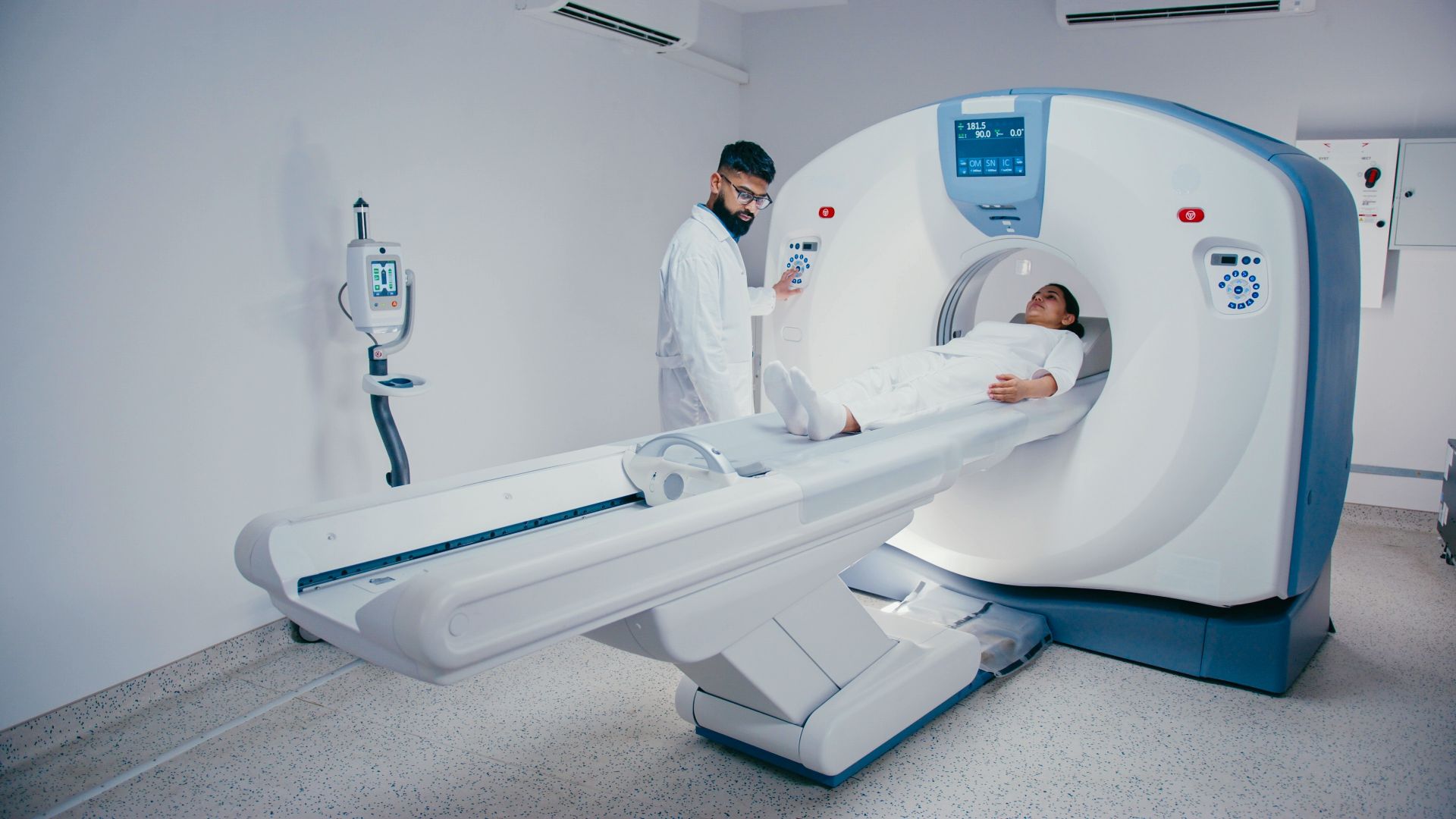
Quantum-enhanced MRI project targets higher-resolution brain metastases imaging
A €2.5 million Horizon Europe-backed project will develop higher-resolution quantum-enhanced MRI for brain metastases research and establish a new metabolic imaging platform in South Korea.
The three-year RESQ project will bring together NVision Quantum Technologies, Yonsei University, Ulm University in Germany and Tesla Dynamic Coils in the Netherlands to advance hyperpolarised MRI and deploy NVision’s POLARIS platform at Yonsei University.
The platform is scheduled to be installed at the South Korean university in early 2027, creating a new research facility focused on metabolic brain imaging.
Brain metastases can be difficult to monitor using conventional imaging. Standard MRI can show the size and location of tumours but does not directly measure metabolic activity, which can provide information about how tumours behave and respond to treatment.
Hyperpolarised MRI enables researchers to visualise tumour metabolism in real time, but the small size of many brain metastases and changes caused by treatment can make individual lesions difficult to characterise.
The RESQ project aims to address these challenges by developing quantum-enhanced metabolic imaging technology designed to improve the resolution and sensitivity of hyperpolarised MRI.
Quantum technology aims to improve brain tumour imaging
NVision’s POLARIS platform uses quantum-enhanced hyperpolarisation to increase the MRI signal of metabolic imaging agents, allowing researchers to observe metabolic processes in real time using standard MRI systems.
As project coordinator, NVision will deploy the platform at Yonsei University and lead development of the project’s quantum sensing technology and supporting infrastructure.
Researchers aim to double the spatial resolution of hyperpolarised MRI while maintaining signal quality. The goal is to enable smaller tumours to be visualised in greater detail, with clearer definition of their boundaries and metabolic activity.
Yonsei University will implement and biologically validate the imaging workflow using preclinical models of brain metastases. The university has established expertise in hyperpolarised MRI and metabolic imaging.
Ho-Taek Song, professor of radiology at Yonsei University College of Medicine, said: “By combining hyperpolarized MRI with NVision’s quantum-enhanced approaches and Yonsei’s expertise in metabolic imaging and preclinical brain metastasis models, we aim to better understand tumor metabolism and improve the detection and monitoring of brain metastases.”
Ulm University will develop quantum-optimised imaging methods designed to improve image quality and signal efficiency, while Tesla Dynamic Coils will develop dedicated radiofrequency coil hardware for the imaging system.
Catalina Arteaga, managing director at Tesla Dynamic Coils, said: “Within this consortium, Tesla Dynamic Coils will develop a dedicated RF coil required to enable high-performance hyperpolarized brain imaging.”
The company said the technology will be designed to support future research applications following validation within the RESQ project.
POLARIS platform expands into South Korea
The planned deployment at Yonsei University represents an expansion of NVision’s POLARIS platform into Asia.
The company said the platform is already deployed at research and clinical institutions in Europe and the USA, including Memorial Sloan Kettering Cancer Center and the University of Cambridge.
Researchers at these institutions are investigating metabolic imaging applications across oncology and other diseases, including liver disease and multiple sclerosis.
The RESQ project is intended to establish a long-term research partnership between NVision and South Korea, with potential collaboration involving researcher exchanges and further development of quantum-enhanced imaging infrastructure.
Sella Brosh, CEO and co-founder of NVision Quantum Technologies, said: “RESQ advances POLARIS for one of the most demanding applications in medical imaging and creates the foundation for our long-term presence in South Korea.”
The project will also bring together expertise in quantum sensing, hyperpolarised MRI, preclinical cancer research and specialist MRI hardware.
The European partners said the collaboration demonstrates how quantum technology developed through European research programmes can be integrated with existing international healthcare research infrastructure.
RESQ adds to NVision’s portfolio of publicly funded research projects focused on quantum medical technology. The company said its European research consortiums have secured more than €38 million in public grant funding since 2022.
The new project will run for three years, with POLARIS scheduled for deployment at Yonsei University in early 2027.
The research will initially focus on preclinical brain metastases models. Further work will be needed to establish whether the technology can eventually support clinical applications in cancer imaging.