How AI is reshaping clinical trials: Saama on the next phase of regulated AI
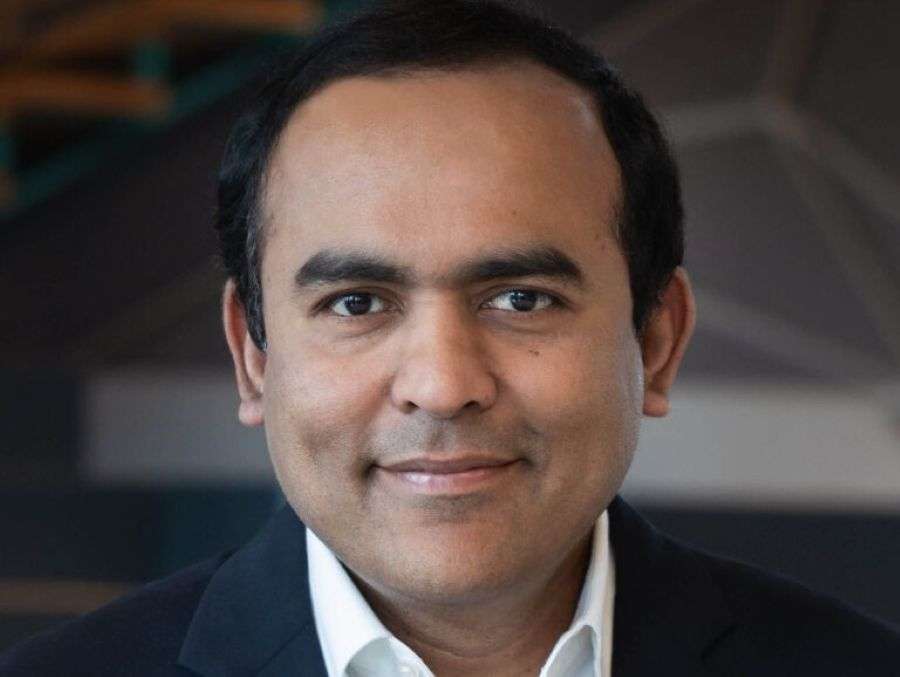
Saama’s Chief Customer Success and Growth Officer Ari Srinivasan speaks to Discover Pharma’s editor-in-chief Liza Laws about AI, agentic AI and the changing clinical trial landscape.
Ari Srinivasan is responsible for driving growth across the company’s AI-driven SaaS platform and life sciences solutions, while working with partners and customers on adoption and innovation. He joined Saama in 2024 after almost three decades working across the life sciences, technology and data sectors.
Before joining Saama, he was Group Executive Vice President for data and AI solutions at Real Chemistry. He has also held senior leadership roles at Cognizant, IBM and Cegedim, working across technology, data, AI and life sciences. His experience spans large global pharmaceutical companies through to emerging biotechs, giving him a broad view of how technology is changing drug development and clinical research.
From life sciences services to AI
Liza: Saama has been repeatedly recognised for its AI platform. What do you think has driven that recognition?
Ari: I think one of the key reasons Saama has been recognised as an AI company is its DNA. The company started in the Bay Area in the late 1990s as a services-centric organisation, but it was always focused on life sciences and health sciences. We have never moved away from that space.
What has transformed is that, almost 10 years ago, Saama consciously moved towards focusing on AI and leveraging AI. At that time, it was more machine learning and natural language processing, but the company invested early, including through what we call Saama Research Labs.
At the same time, we decided that more than 10 or 15 years of collective experience needed to be brought into a platform-based offering rather than simply providing resources or subject matter expertise.
We attacked that on three fronts. The first was enhancing subject matter expertise specific to the industry. In a regulated industry, if you do not understand the area, a general technologist can only go so far.
The second was investing in a platform approach, so customers were not continually buying repeat solutions but could use something standardised to generate insights, irrespective of the size of the company.
The third, which is particularly important for 2026 and beyond, was investing in the AI research lab.
These are core AI researchers who do not build products. They conduct AI research. When companies such as OpenAI, Anthropic, Google or others release a new model, these researchers are at the forefront of testing, benchmarking and working with those models.
Saama started working with GPT before ChatGPT became mainstream. We then recognised that large language models, as they stood, could not simply be used to answer medical questions because medical applications require data grounding and safeguards against hallucination.
We took a Meta Llama model and developed a bespoke large language model trained using medical question-and-answer datasets. When benchmarked, it demonstrated much better accuracy than GPT at that time.
That is important because you can spend money on a model or buy a licence, but you cannot truly put it to use in a regulated environment without people who have worked with it for a specific period and understand how to apply it.
That is why I believe Saama is known for AI. The focus has moved from being a services provider to working on core AI and, importantly, applying AI contextually in a regulated environment. That is our differentiator.
Liza: And Saama has been doing this for considerably longer than many companies now entering the AI space.
Ari: Exactly. Somebody can have a few million dollars to invest and subscribe to publicly available models. But you cannot beat 10 years of regulated experience, augmented by subject matter expertise and iterated with humans in the loop, and then deliver that as a regulatory-grade, enterprise-grade offering in six months simply because you have invested more money.
A changing customer base
Liza: How has Saama’s customer base evolved? Has there been growth among large pharmaceutical companies, or is the focus increasingly on mid-market biotech?
Ari: Originally, Saama was very focused on top-tier pharmaceutical companies. Over the last two or three years, our reliance on that segment has reduced to around half, with the remainder increasingly coming from the small and mid-market ecosystem.
We also have an emerging set of relationships with contract research organisations (CROs), so we are now working across three areas.
The first is top-tier pharma, which remains a core focus because the number and complexity of trials they conduct is enormous. The second is the mid-market ecosystem and smaller and emerging biotechs. The third is the CRO market.
Because these companies have different requirements and different market sizes, we have also moved beyond offering only monolithic enterprise software. We are increasingly providing modular stacks and smaller agents and agentic components designed for specific tasks, personas or both.
Liza: It feels as though the pharmaceutical industry has moved incredibly quickly. Only a few years ago, conversations at conferences were dominated by decentralised trials, whereas now we are talking about agentic AI.
Ari: You’re absolutely right. Saama has remained true to its mission throughout that evolution. Internally, there are incredibly intelligent and passionate people who want to make a difference by helping a drug or therapy reach another patient faster.
The industry itself has also changed. Historically, pharma was not an early adopter of technology. It tended to be a fast follower or even a laggard. COVID accelerated a shift, and over the last few years the industry has started looking for solutions that remain within the regulated ecosystem but are much more agile.
Fortunately, Saama had already been working in that direction, which has helped us position ourselves ahead of others in the market.
From AI to agentic AI
Liza: What has been the biggest inflection point for Saama over the last few years?
Ari: Our continued investment and maturity have reached a point where the industry was previously spending money on many different pieces of the puzzle, often from different vendors. These systems did not necessarily communicate with one another.
Saama’s difference is a unified approach. We can provide individual or modular solutions, while also working with other investments that a customer already has. A company does not have to replace its entire technology stack and move everything to Saama.
That has been a significant proof point for us. Across quality, time and cost, we can accelerate outcomes alongside existing investments.
Liza: Saama is now investing heavily in agentic AI and generative AI applied to clinical data. What do you see happening next?
Ari: We are very focused on enhancing our investments across AI and agentic AI.
We are moving towards platforms that can perform individual tasks or combinations of tasks for specific personas, such as data managers or medical monitors.
But the technology is only one part of that. We are also investing in the associated talent, including subject matter expertise and change management. Any major technology shift requires people to be enabled, trained and cross-trained so they can move from traditional ways of working to new ones.
We want to work with sponsors to help them navigate that shift with as little disruption as possible.
What does agentic AI actually mean?
Liza: For people who aren’t immersed in clinical data systems, could you explain what Saama’s platform does in relatively simple terms?
Ari: Think of it as a modular but unified agentic AI platform supporting the clinical trial lifecycle from study start-up through to submissions.
There are several dimensions across that lifecycle, including study start-up, data management, clinical operations, risk-based quality management, medical monitoring and submissions.
Saama offers individual solutions across these areas, but they can also be unified and integrated if a customer wants to use the end-to-end flow.
A clinical trial brings together many different stakeholders, including data managers, medical and safety monitors, central monitoring teams, biostatisticians and others. In many companies, that can mean hundreds or thousands of people. They need a unified version of the truth.
Saama provides that vertically for individual functions as well as through a unified component.
The additional layer is agentic AI. We already had AI capabilities embedded within the platform to flag issues. Now we have added an agentic layer where individual tasks can be performed by an agentic component, with a human remaining in the loop.
That is extremely important in a regulated environment. A machine does not sign a submission document; a human does.
Keeping humans in the loop
Liza: Where does generative AI appear in the client experience? Is it visible to users or largely working behind the scenes?
Ari: This is particularly important in a regulated ecosystem. You cannot have a black-box operation.
The AI embedded across the platform identifies outliers, anomalies and discrepancies and flags them to individual stakeholders, such as data managers, medical monitors, safety monitors and biostatisticians.
It can go further. In a data management environment, for example, it can raise a query based on something it has identified and ask the human whether that query should be approved and sent to the relevant system.
Everything remains under human oversight.
Every action the AI takes, including an anomaly it identifies, is audited and tracked. If a regulator asks where a discrepancy came from, the system needs to be able to show what it identified, how it identified it and what happened afterwards.
The agentic component takes this another step forward. Instead of simply identifying an anomaly, it can say: “Here is something I can do to address this anomaly. Do you approve it?”
For a data manager, you can think of it almost like having a junior data manager who can perform tasks under the inspection, guidance and approval of the experienced data manager.
That frees people to concentrate on more strategic work while routine tasks can be handled by a reliable, auditable agent.
Measuring the impact
Liza: What efficiency gains are clients seeing, and how do you measure them?
Ari: It depends on the individual client’s maturity, but there are published and documented examples covering data management effort, reductions in queries and time freed up for medical monitors.
These are client-certified and client-approved figures. As we introduce new components, we continually rebaseline them with client endorsement and validation.
We measure outcomes across quality, time and cost. Quality is the number one element and is non-negotiable.
Alongside quality, we ask whether the technology is saving effort and freeing people from routine tasks, always with appropriate human approval and oversight.
Why regulation matters
Liza: What are the risks for companies that don’t have the same focus on quality, regulation and auditability?
Ari: You can buy access to the same frontier models. I can subscribe to Claude, and somebody else can subscribe to the same model. The differentiator is whether what you are doing is anchored, auditable and traceable.
It is not about whether you can use a frontier model. It is whether you can make sure that it operates within the regulated environment and produces outputs that are grounded in reality without hallucinating.
Saama also has experience of knowing when to use a particular model or combination of models. We call this a “decision by jury” approach. It is about selecting the right approach to achieve the best outcome, with the appropriate quality, cost and timeframe.
Quality cannot be compromised. Otherwise, you could have a database lock reopened, a regulatory filing rejected or a product launch delayed, alongside competitive consequences and potential loss of goodwill.
Our focus is therefore on making sure AI is ideally zero-hallucinating, traceable and grounded, giving customers confidence that actions or interventions are based on information that can be audited.
Where AI could take clinical development next
Liza: Where does Saama see AI taking clinical development over the next year or so?
Ari: AI is changing so rapidly that “next year” can seem like a very long time. Everything is increasingly measured in weeks and months rather than years.
At Saama, we are doubling and tripling down on agentic AI, including what we call an agent operating system, or Agent OS.
The idea is to provide a framework with strong observability, command and control over how different agentic components work together. Agents can be invoked from different parts of the platform, interact with each other and orchestrate processes end to end.
Our Clinical Agent OS will also allow sponsors and citizen developers to bring their own agents and develop agents on the platform.
There are tasks that can be performed with certainty, human involvement and appropriate oversight. An agent could take on blocks of work with predictability, quality and certainty, much like a junior data manager.
The third element is enabling sponsors to build their own agents. They should be able to use their own talent as a force multiplier rather than continually having to acquire new technology.
What should pharma and biotech leaders take away?
Liza: What would you want a pharma or biotech leader reading this to take away about partnering with Saama?
Ari: We are one of the most AI-forward leaders in the clinical trial lifecycle. We also go beyond a single tool or ecosystem consolidation.
You can buy frontier models and subscribe to licences, but what you cannot buy instantly is contextual differentiation and the experience of applying AI in this regulated environment.
You need a trusted partner that has done this and can support not only today’s journey but also future proof you for the next wave.
Otherwise, companies risk repeatedly making large technology investments every few years simply to get back to parity.
My message would be focus on the science and let us focus on the technology. Collectively, we can help enable a competitive differentiator through our AI background and experience.
Liza: Finally, is there anything else you would like our readers to know about where Saama believes this is heading?
Ari: Even frontier models need boundaries and guardrails. Models constantly evolve, so subscribing to the latest model or signing a deal with a major AI company does not automatically make you number one in AI.
The differentiator is practical application within regulatory guardrails, making sure AI is auditable, traceable and trackable so that it can withstand regulatory scrutiny and ultimately help get treatments to patients faster.