
Vivodyne raises $40M to advance human tissue testing as alternative to animal models
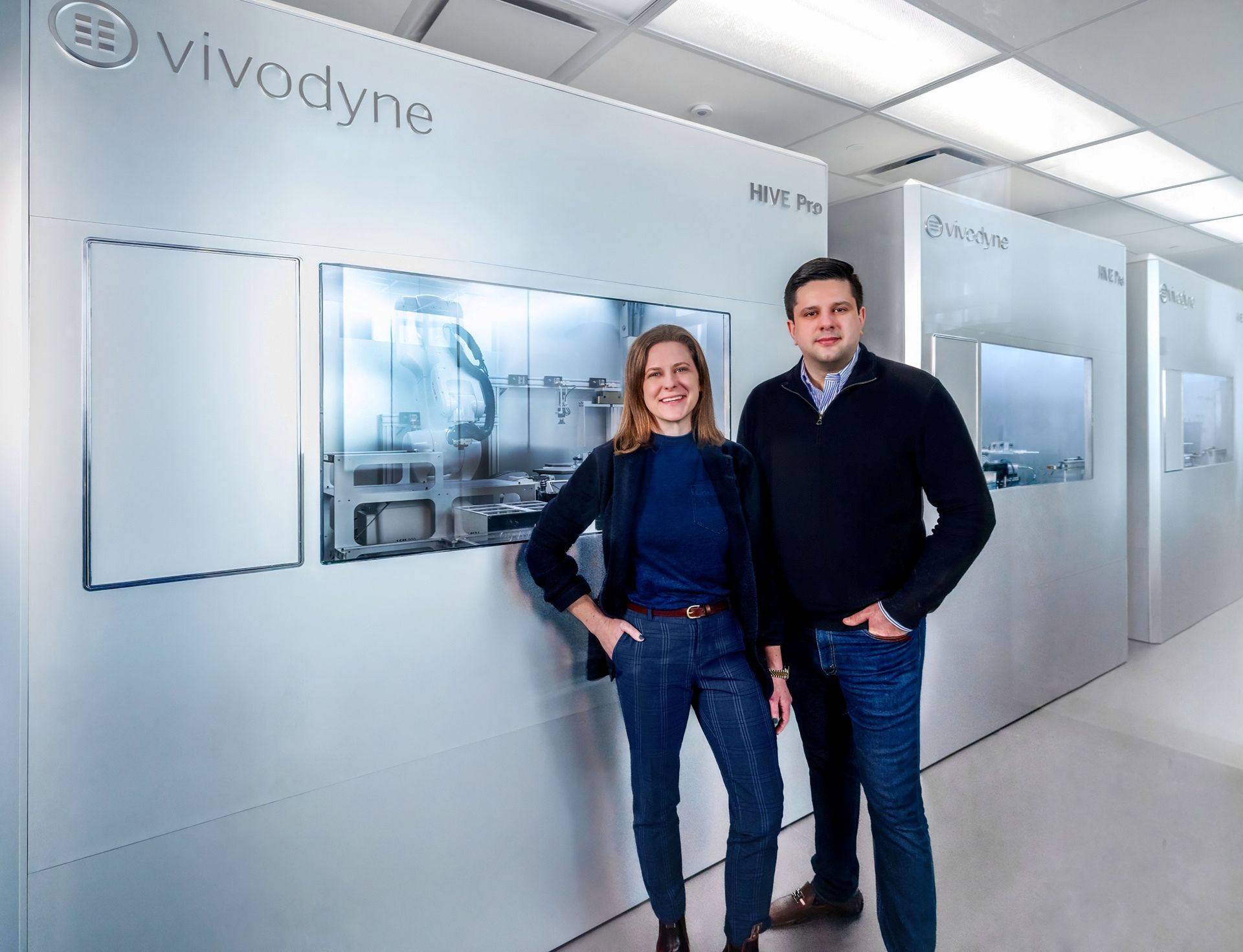
Vivodyne has secured $40 million in Series A funding to expand its robotics and AI-powered platform, which produces functional human tissue models at scale.
The company says the system is designed to provide pharmaceutical developers with clinically predictive human datasets that could significantly reduce the industry’s reliance on animal testing – a practice often criticized for its limited relevance to human biology.
The round was led by Khosla Ventures, with participation from Lingotto Investment Management, Helena Capital, Fortius Ventures, and existing investors including Kairos Ventures and MBX Capital. The funding will support the launch of a 23,000-square-foot fully robotic laboratory in South San Francisco, aimed at increasing testing throughput for global pharmaceutical clients.
Vivodyne’s platform combines automated biomanufacturing with AI analytics to grow and analyze tens of thousands of complex human tissues daily. The company says these models – ranging from liver and lung tissue to bone marrow and lymph nodes – capture disease responses and immune functions in ways that animal models cannot. The approach is already in use by several large pharmaceutical firms and is aligned with recent FDA and NIH initiatives supporting the transition away from animal-based models.
Its platform can generate more human-relevant data annually than the entirety of US clinical trials, driven by an automated workflow that integrates high-resolution imaging, single-cell transcriptomics, and proteomic analyses. The tissues used are reportedly 1,000 times larger than traditional organoids, enabling broader functionality and higher fidelity in drug response modeling.
The technology is applied across multiple therapeutic modalities, including small molecules, biologics, mRNA-based lipid nanoparticles, and cell therapies. The company claims the system’s scale and iterative learning capacity can support end-to-end preclinical decision-making, from target identification to safety profiling.
Vinod Khosla, founder of Khosla Ventures, said: “Robotics and AI are already starting to fundamentally change the healthcare landscape, and Vivodyne is pioneering the way there. Using robotics and AI, we can grow and test over 100,000 different whole human tissues automatically within two weeks, enabling pharma to achieve human-equivalent insights before committing billions of dollars to clinical trials.”
The company’s data-driven approach reflects broader industry efforts to reduce late-stage attrition in drug development. With a clinical trial failure rate still hovering around 95%, platforms that offer earlier, human-relevant testing are increasingly seen as key to improving efficiency in pharmaceutical R&D pipelines.