Veeva unveils bold vision for simplifying, standardising, and AI-powered innovation
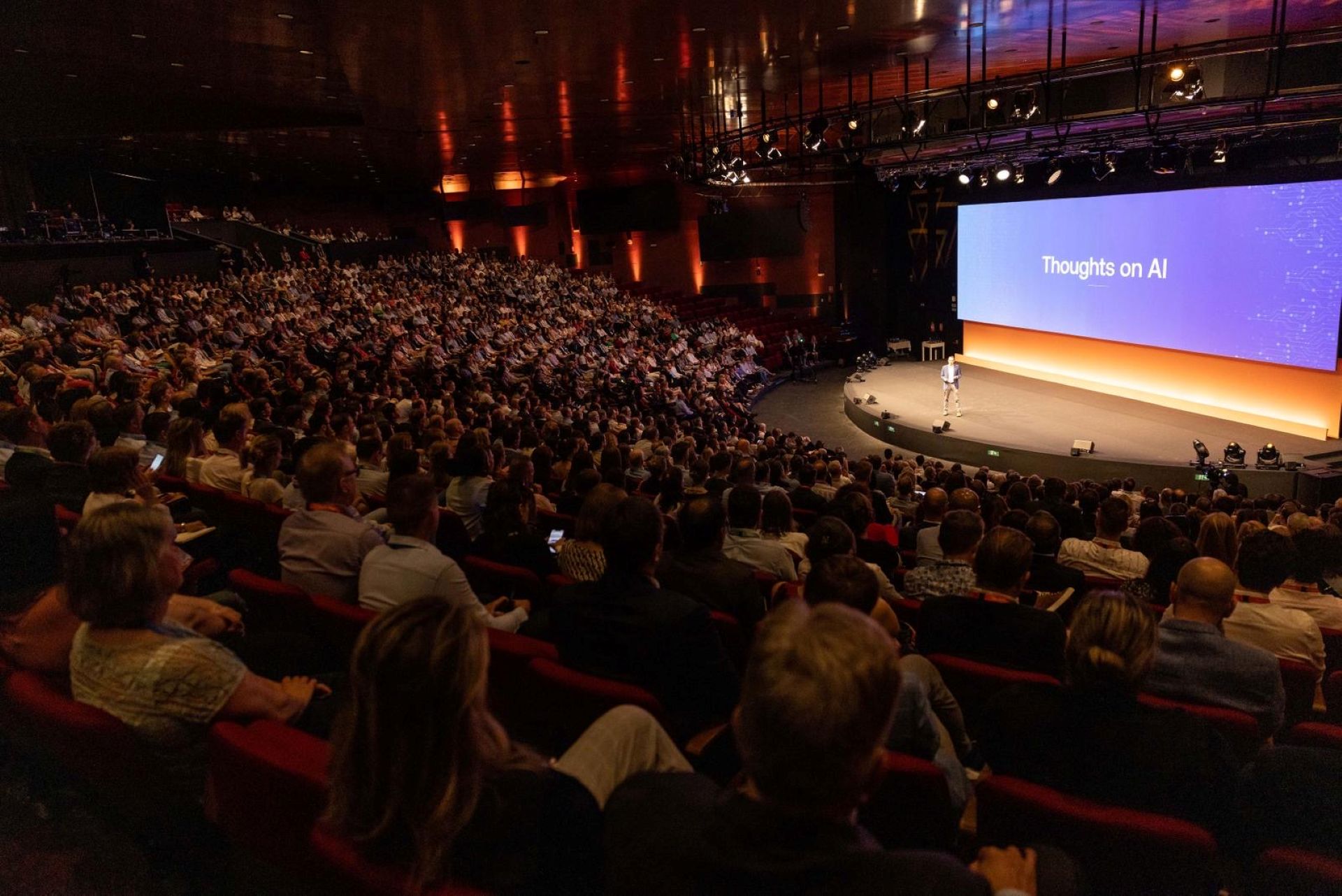
In a keynote address that signaled both reflection and momentum, Jim Reilly President of Development Cloud at Veeva, laid out a strategic roadmap aimed at simplifying the tech landscape for life sciences companies, while embracing artificial intelligence (AI) as a catalyst for long-term industry transformation. This was the opener for the Veeva Summit 2025, that began in Madrid today (June 4).
“It’s been a year of great progress,” Reilly began, “but it’s also a year of important thinking for us at Veeva as we look ahead to the next five years. I’m excited to share with you some of the key areas where we’re investing – for our customers, and in the industry overall.”
Tackling complexity: A call for simplification and standardisation
At the heart of Veeva’s vision is a strong push toward simplification and standardization – two goals Reilly called essential for improving operational efficiency across pharma and biotech companies.
“We’ve been burdened with too much tech, overcomplicated processes, and a lack of standardization,” Reilly explained. “Many of us have a spaghetti diagram of point solutions, each solving a specific need but adding complexity and inefficiency.”
This fragmentation, he said, not only hampers productivity within companies but also affects stakeholders across the ecosystem – including CROs, CDMOs, research sites, and patients.
“Our role at Veeva is to help you be more efficient and effective,” said Reilly. “We’re doing that in three ways: through a common platform, standard applications that reflect best practices, and embedded process excellence across functions.”
He pointed to industry-specific data models like the TMF Reference Model and the Quality Reference Model as critical to driving harmonisation, while emphasizing that these efforts “might sound simple on the surface, but they’re not – they’re real innovation.”
AI in life sciences: Hype meets practicality
Turning to artificial intelligence, Reilly described large language models (LLMs) as ushering in a “new computing paradigm” with transformative potential, comparable to the rise of mobile or cloud computing.
“AI is not a minor thing,” he said. “It’s incredibly powerful, but it’s also non-deterministic. It doesn’t do the same thing every time—it’s more like a person.”
Yet he tempered the excitement with a dose of realism: “We need to get practical. Applying AI to a specific use case in our industry is hard. It needs to work with quality and compliance in mind.”
To bridge the gap between promise and practical value, Veeva is embedding AI directly into its core applications—not as a bolt-on, but as a native component of the platform.
“The best outcome comes from AI working in the context of core business applications,” said Reilly. “Those systems—CTMS, QMS, regulatory submissions—they’re not going away. But AI should complement them, understand their context, and enable smarter workflows.”
Veeva AI: Agents and shortcuts to boost productivity
Reilly introduced Veeva AI, a platform-native initiative set to redefine how users interact with Veeva’s applications.
“There are two parts to Veeva AI,” he said. “Agents—which are like assistants that help produce outputs, run processes, and answer questions. And then there are AI Shortcuts—personalized tools that automate tasks based on how you like to work.”
The first agents for Veeva Commercial Cloud are coming in December 2025, with Veeva Safety’s arriving in August 2026. The agents for Veeva Clinical Operations, Veeva RIM, and Veeva Quality, will also be arriving in December 2026, and those for Veeva Clinical Data are scheduled for 2027.
“In safety, for example, we’re seeing major benefits in automating case intake, generating narratives, and translating text,” Reilly said. “In clinical, we’ll enhance document generation—including informed consent forms—and supercharge the TMF bot to extract fields and QC documents automatically.”
The AI-powered future extends even to clinical data management, where Veeva envisions automating source data verification and integrating directly with EMR systems—though Reilly noted, “That’s a bit further out, and we need to get it right.”
Driving long-term industry productivity
Reilly closed his talk with a clear-eyed view of what it will take to make AI adoption successful: organizational change, process redesign, and collaboration with regulators.
“Rolling out AI in our industry will take work. It’s like a project. It changes what people do and what computers can do,” he cautioned. “We’ll focus on early adopters and refine the products before scaling. Done right, we believe AI can improve industry productivity by 15% or more.”
For Veeva, the vision is bold—but grounded. “AI should be a positive force for the industry,” Reilly concluded. “And I hope you’re just as excited as I am about what’s ahead.”