
Pusan National University study links stress signalling to immune escape in cold tumours
A Pusan National University study has identified a signalling pathway that may drive natural killer cell dysfunction and immune escape in cold tumours.
Stress signalling reprograms natural killer cells
Researchers led by Yuseok Moon at Pusan National University investigated how chronic environmental and metabolic stress affects natural killer (NK) cells in immunologically cold tumours.
The study, published in Signal Transduction and Targeted Therapy, focused on epithelial ovarian cancer as a model of a tumour that can be resistant to immune-based treatments.
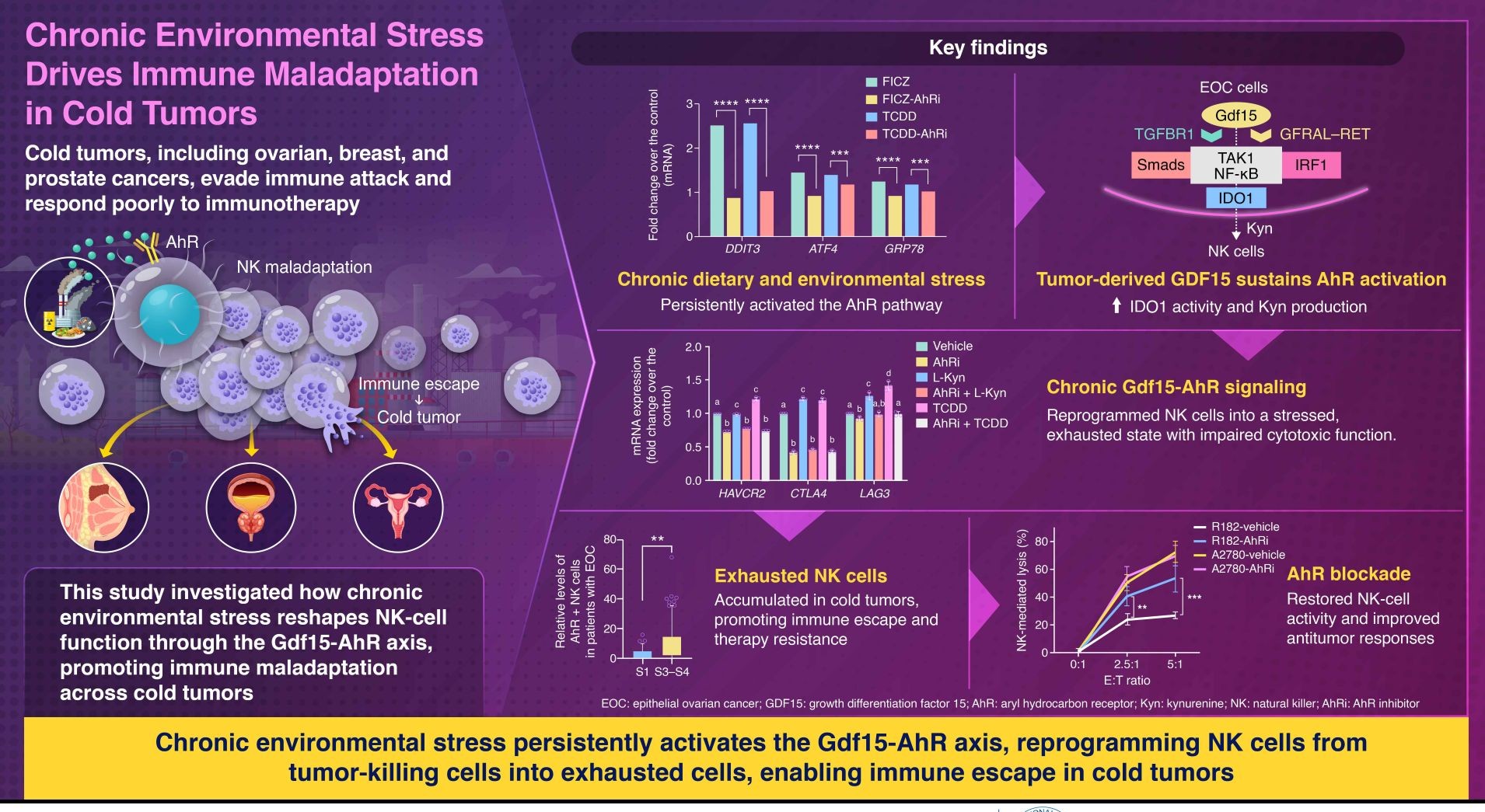
The researchers found that persistent activation of the GDF15–IDO1–kynurenine–AhR signalling pathway was associated with changes in NK-cell function.
GDF15 is a factor produced by cells under various forms of stress, while the aryl hydrocarbon receptor (AhR) responds to environmental chemicals, dietary compounds and metabolites.
The study suggests that chemoresistant ovarian tumour cells can produce high levels of GDF15, increasing IDO1 activity and kynurenine production and sustaining AhR activation in NK cells.
Prof Moon said: “We found that a cancer-secreted factor, GDF15, activates a stress-sensing receptor (AhR) in natural killer (NK) cells—the body’s frontline defense against cancer.”
The researchers reported that persistent signalling shifted NK cells towards an exhausted state, reducing their ability to kill tumour cells despite their continued presence within tumours.
Blocking AhR restored NK-cell activity
The study combined bulk transcriptomic analysis, single-cell RNA sequencing, clinical patient cohort analysis, NK-cell functional assays, patient samples and mouse tumour models to investigate the pathway.
The researchers found that blocking AhR signalling restored NK-cell function in their experimental models.
The findings suggest that the GDF15–AhR pathway could be investigated as a potential target for improving immune responses in cold tumours, although further research will be needed to establish whether the approach can translate into an effective treatment.
The team also investigated the relationship between the pathway and immunotherapy response, with the researchers proposing that measurements of circulating GDF15 and AhR activity in NK cells could potentially help identify patients less likely to respond to immunotherapy.
Prof Moon added: “Targeting the GDF15–AhR axis, particularly through AhR inhibitors, may restore NK-cell function and help convert immune-cold tumors into immunotherapy-responsive tumors when combined with existing immune checkpoint inhibitors.”
That therapeutic possibility remains preclinical and would require validation in further studies before it could be considered a treatment strategy.
Findings could inform cold tumour research
Cold tumours are characterised by limited immune-cell activity and can respond poorly to some immunotherapies. Ovarian, breast and prostate cancers can include tumour subtypes with immunologically cold characteristics.
The researchers suggest that the findings provide a potential explanation for how chronic stress signalling within the tumour microenvironment can alter immune surveillance.
The study also raises questions about the contribution of environmental and metabolic factors to tumour immunity. However, the findings do not establish that exposure to specific environmental chemicals causes treatment resistance in patients.
Instead, the work identifies a biological pathway that could be investigated further in relation to immune dysfunction and therapeutic response.
The authors said the GDF15–AhR axis may provide a basis for future research into approaches that restore NK-cell activity and improve responses in immune-resistant tumours.
The study was published as “The Gdf15-xenobiotic receptor axis shapes NK cell maladaptation predicting cold tumors under environmental stress” in Signal Transduction and Targeted Therapy on June 5, 2026.