Bruker launches new proteomics and metabolomics platforms at ASMS 2026
Bruker has unveiled new mass spectrometry platforms, software and workflows designed to advance proteomics, proteoform analysis and metabolomics research.
Bruker Corporation has announced a series of new mass spectrometry systems, software platforms and research collaborations at the American Society for Mass Spectrometry (ASMS) 2026 conference, with a focus on proteomics, metabolomics and structural protein analysis.
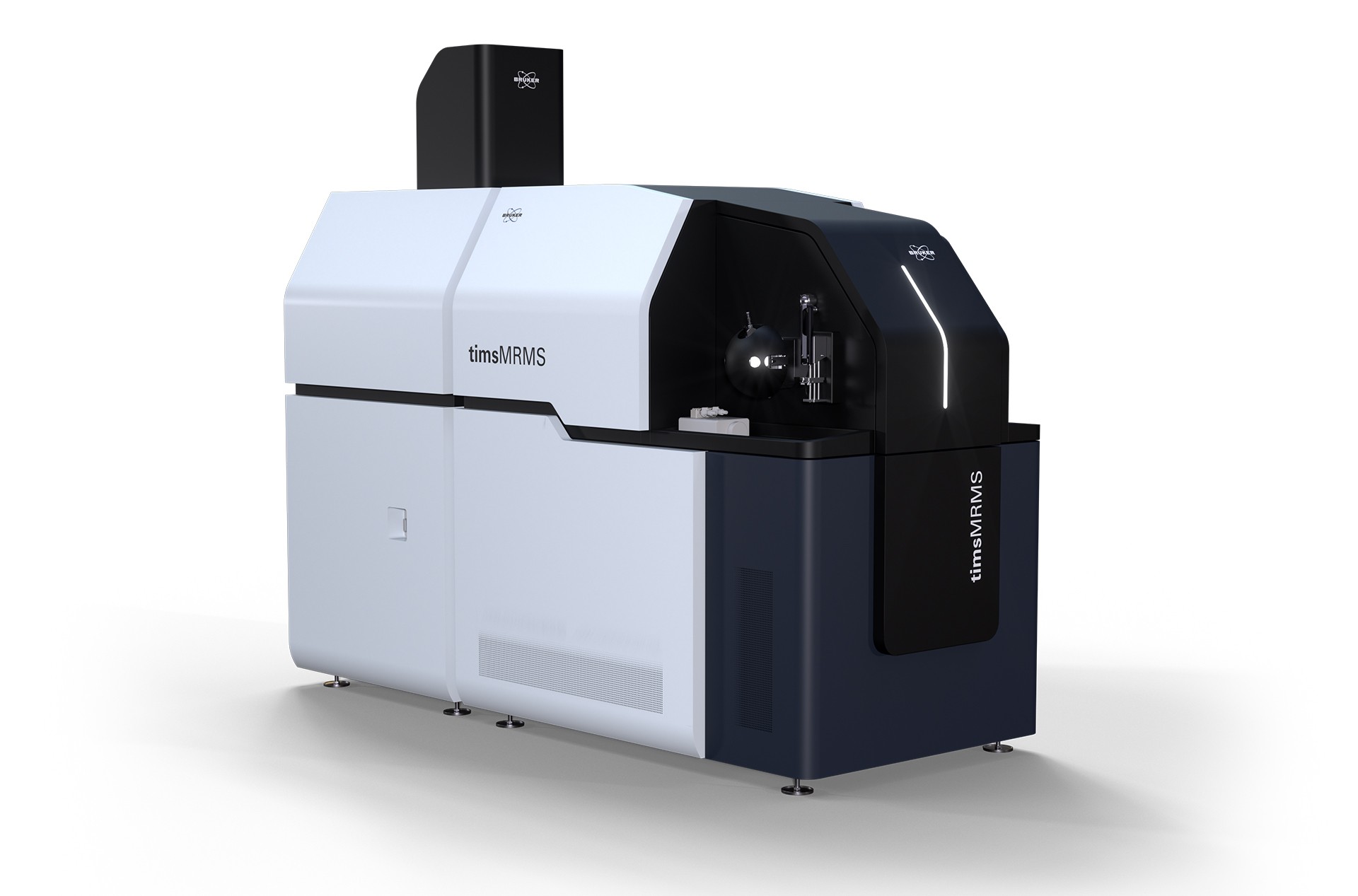
The launches include the new timsMRMS mass spectrometer, advances to the timsUltra and timsOmni platforms, new artificial intelligence-enabled software tools and a hybrid metabolomics workflow designed to combine targeted quantification with untargeted discovery in a single experiment.
The announcement reflects growing demand for technologies capable of analysing increasingly complex biological systems, particularly in oncology, biomarker discovery and biopharmaceutical development.
One of the most significant launches is the timsMRMS platform, which combines trapped ion mobility separation with magnetic resonance mass spectrometry. According to Bruker, the system delivers mass resolving power of up to 10 million and is designed for applications ranging from life sciences research to energy sector analysis, including petroleomics, biofuels and battery research.
In proteomics, Bruker reported further performance gains for its timsUltra AIP platform. The company said new instrument enhancements, razor-PASEF workflows and Spectronaut 21 software now enable identification and label-free quantification of more than 10,000 proteins in cell line samples while supporting high-throughput analysis of more than 6,500 proteins at 500 samples per day.
The company highlighted translational oncology work led by researchers at the University Hospital Tübingen and the University of Freiburg, where large-scale proteomics is being used to identify actionable tumour biology in cases where genomic sequencing alone does not provide clinically relevant answers.
Professor Stephan Singer, from University Hospital Tübingen, said: “In complex cancer cases, genomics does not always provide decision relevant answers, particularly with FFPE tissue. With timsTOF-based proteomics we routinely quantify more than 10,000 proteins across clinical samples, adding functional pathway activity, metabolic dependencies, and tumor specific resistance programs.”
Bruker also expanded capabilities for intact protein and top-down proteomics through its timsOmni platform. The company introduced a new argon collision gas option, which it says improves collision-induced dissociation sensitivity by up to four-fold for biomolecules.
A new partnership with Integrated Protein Technologies aims to simplify sample preparation for intact and top-down protein analysis through automated, high-throughput workflows.
Artificial intelligence features prominently across the latest software releases. New versions of OmniScape, ProteoScape and GlycoScape include enhanced tools for proteoform identification, post-translational modification analysis and glycoproteomics. A new de novo sequencing algorithm, LYRA, has been introduced to interpret complex top-down mass spectrometry datasets and support protein characterisation.
Bruker also announced continued development of tims-Casanovo, a transformer-based neural network created in collaboration with researchers from the University of Washington, Helmholtz Munich and the University of Antwerp. The software is designed to translate tandem mass spectrometry spectra into amino acid sequences for challenging proteomics applications.
In metabolomics, the company launched an early-access programme for a new hybrid workflow on its timsMetabo platform. The approach combines kit-based absolute quantitation from Biocrates assays with simultaneous untargeted metabolomics analysis, an area researchers have long sought to integrate into a single experiment.
Dr Michael Witting of Helmholtz Munich said: “Metabolomics research demands both quantitative data and broad exploratory coverage, but combining these has meant separate workflows, adding complexity. Bringing targeted and untargeted metabolomics together in a single experiment simplifies large-scale studies for a more complete picture of metabolic changes driving disease.”
Outside life sciences, Bruker also announced new semiconductor manufacturing solutions through its recently acquired TOFWERK business. The company said it has received a multi-million-dollar order from a leading memory manufacturer for airborne molecular contaminant monitoring systems aimed at improving semiconductor production yields.
While the announcement contains significant product promotion, it is supported by new platform launches, research collaborations and performance data presented at a major scientific conference, making it a genuine news story rather than solely a commercial announcement.